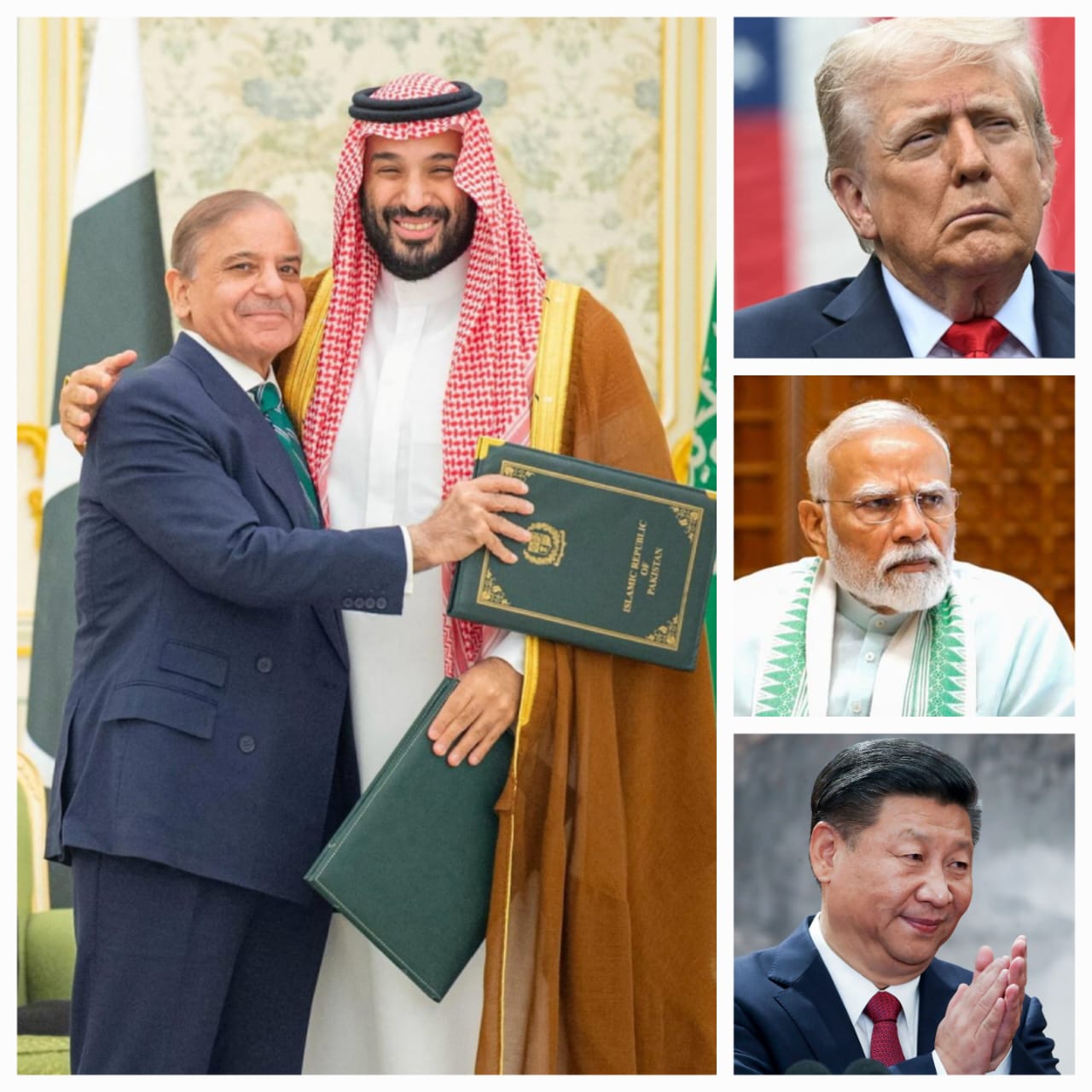
Pakistan and Saudi Arabia signed a Strategic Mutual Defence Agreement (SDMA) on 17th September 2025, with signing notably coming just 8 days after Israeli airstrikes in Qatar. The publicized core of the agreement is that “any agression against either country shall be considered an agression against both.“
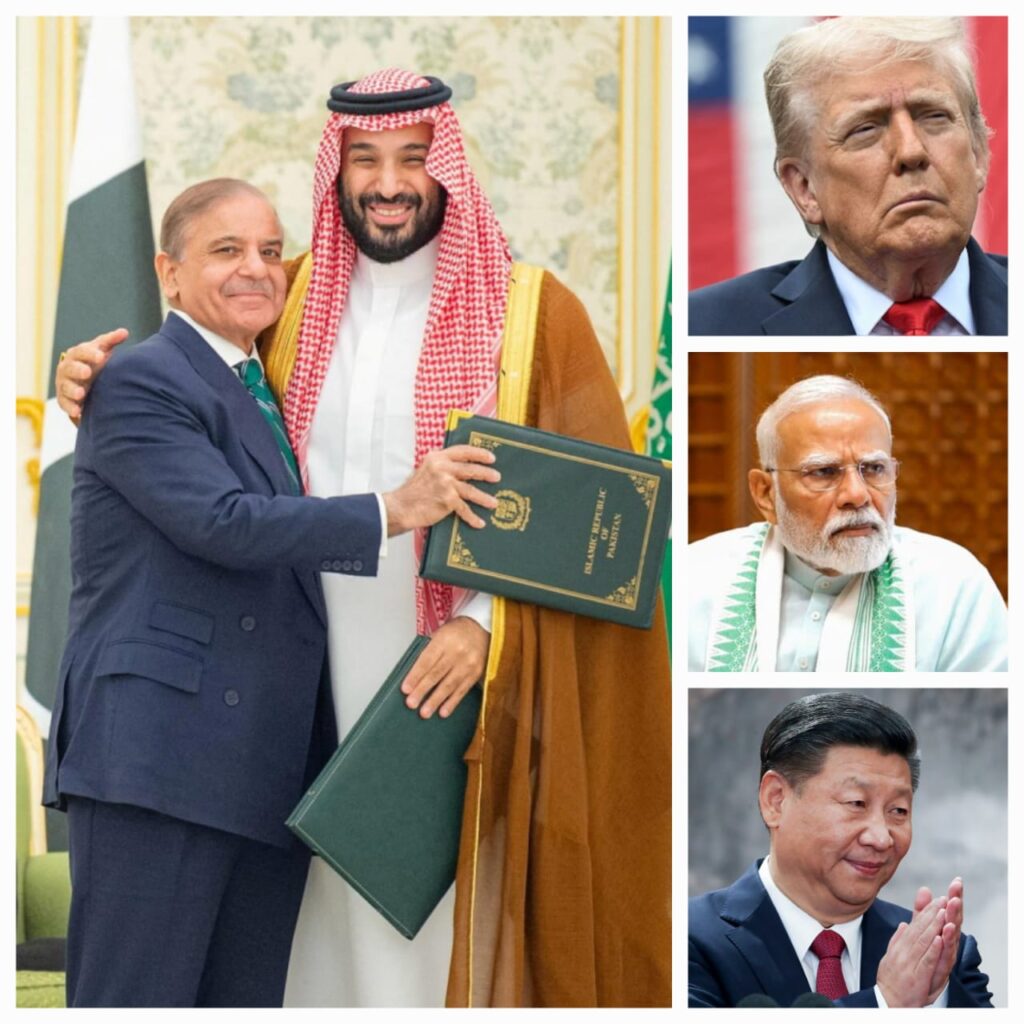
The ideal purpose of this agreement is to act as a deterrent , not as a catalyst. The agreement’s value for Saudi Arabia is in its ambiguity. It signals to Israel and the USA that a regional escalation that threatens their security will no longer be a contained affair, it will draw a third , nuclear armed state within its own calculus.” This complicates every potential Israeli and American war game.
If we analyse it from Islamabad’s perspective, in the scenario of an Israeli attack on Saudi using nukes against Israel (a US ally) or any US asset is unthinkable.It would invite catastrophic retaliation and end Pakistan’s existence as a functional state. Using nuclear weapon , even in defence of Saudi Arabia would finally and irrevocably brand Pakistan as proprietor of the ‘Islamic bomb‘ leading to its total Pariah status and likely severe international sanction and isolation. Therefore, the most likely outcome, the nuclear clause is a bluff meant to be never called. It’s a diplomatic tool to raise stakes and give Saudi Arabia more leverage in negotiations. Pakistan gets economic benefits and strategic depth against India now, hoping the deterrent never has to be tested.
The USA’s perceived unreliability and its unwavering support for Israel’s actions in Gaza have made Gulf states question their absolute dependence on Washington.
The China angle: This SDMA fits perfectly into China’s strategy of creating multipolar world to diminish US influence. China is a top trading partner and oil importer for both Saudi and Iran and primary arms and strategic partner for Pakistan. From Beijing’s perspective , a formal security pact between it “all weather ally” and its primary energy supplier is a masterstroke. It creates Beijing- Riyadh- Islamabad axis that-:
- Counters US influence in Gulf and Indian Ocean.
- Provides a strategic counterweight to the I2U2 quadrant.
- Directly protects Chinese investments in CPEC and BRI projects in the region.
Trump’s desire for Bagram is a direct response to this axis. Control of Bagran would allow the US to project power in Central Asia and monitor China, Pakistan and Russia.
Doubling down on bilateral ties with Gulf states, is the only way for India. India’s value is undeniable , it’s massive market, a source of skilled labour, a fellow energy importer, and a strategic partner in indian ocean.
This SMDA is not a shift itself, but is a powerful symptom and a catalyst of the broader tectonic shift. It can’t be only symbolic, It’s power lies in its potentiality. The great power competition between US and China is the main event, but the SDMA is a critical subplot showing how middle powers are adapting, aligning and preparing for a less stable future. The upcoming years will likely see more of these pacts ,not fewer.
No responses yet